Chiles en Nogada: the flagship dish of Mexico
Every September, a seasonal star returns to menus across Mexico City. One dish appears everywhere: at the market, the fonda on the corner, the white-tablecloth place you’ve been meaning to try, and then, six weeks later, it’s gone again until next year. That dish is chiles en nogada, and depending on who you ask in Mexico City, it’s either the most patriotic thing you can eat or the most controversial
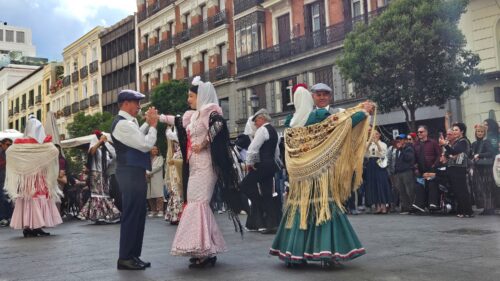
The timing isn’t accidental. September is Mexico’s patriotic month, with Independence Day falling on September 16th, not, as a surprising number of office taco parties would have you believe, Cinco de Mayo. That commemorates a battle fought in Puebla and is, oddly, celebrated much harder in the US and Canada than it is in Mexico. September 16th is the big one: fireworks, the zócalo, El Grito and chiles en nogada on menus across the country.
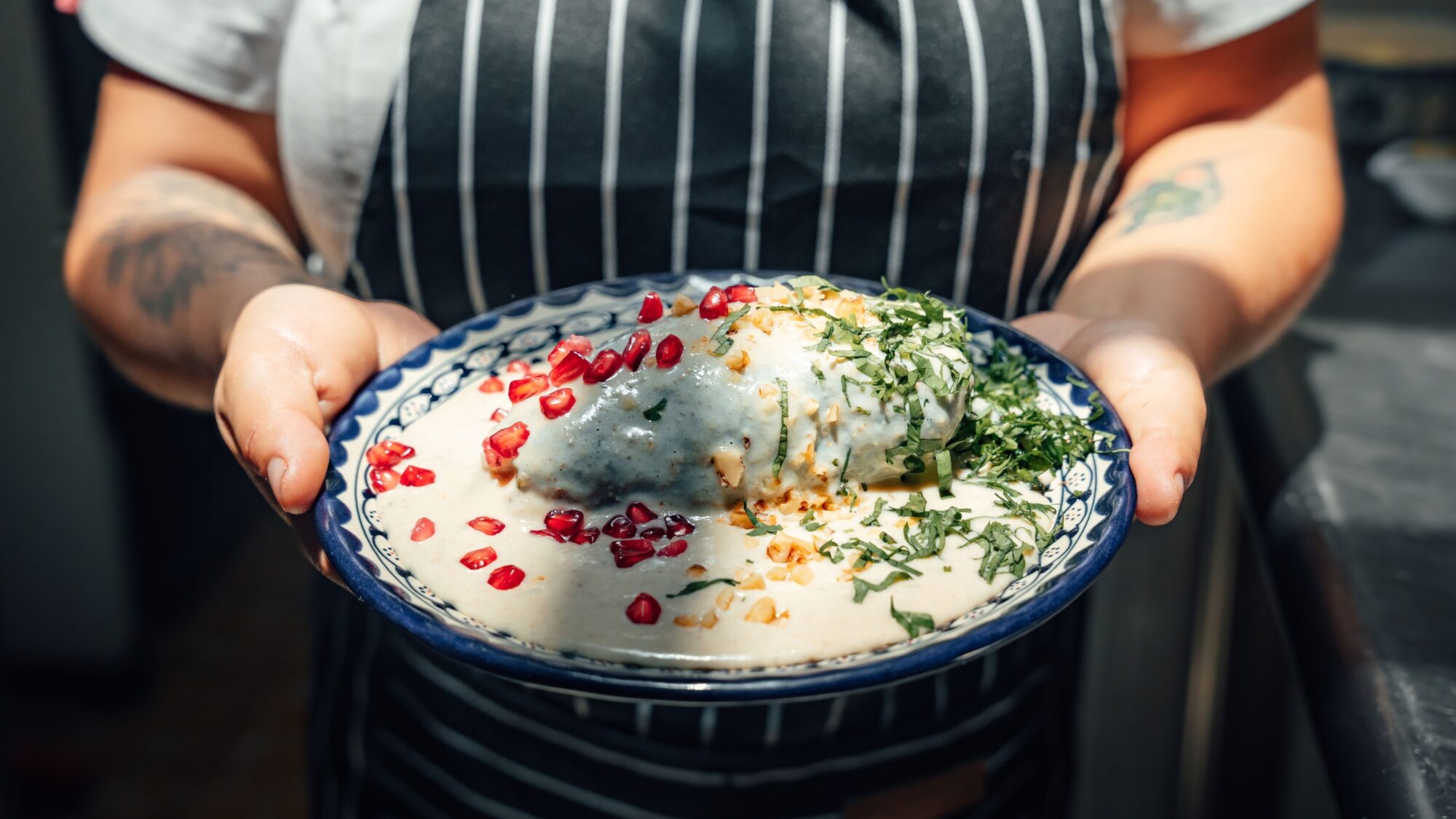
And that brings us neatly to the dish’s origin story, or at least the official version of it. In 1821, Agustín de Iturbide passed through Puebla after the Treaty of Córdoba secured Mexico’s independence from Spain, and the Augustinian nuns of the Convento de Santa Mónica prepared a dish in his honour, using the colours of the new flag: green poblano chile, white walnut sauce, red pomegranate. It’s a tidy story, and it’s the one you’ll hear in every restaurant from here to Puebla.
Historians are less convinced. One account suggests the nuns had been making a version of this dish for decades already, serving it every September 28th for their convent’s own patron saint, and simply told Iturbide it was invented just for him. Which, if true, means Mexico’s most patriotic dish may have started as an exercise in managing a powerful man’s ego; a skill nobody seems to have retired, even two centuries later.
Either way, the reason you can only get it for six weeks is entirely practical: the dish depends on nuez de Castilla, a fresh walnut that’s only in season from July to September, along with ripe pomegranate and the pears, peaches and apples that go into the filling. Outside that window, you’re either eating a frozen substitute or something that isn’t really chiles en nogada at all.
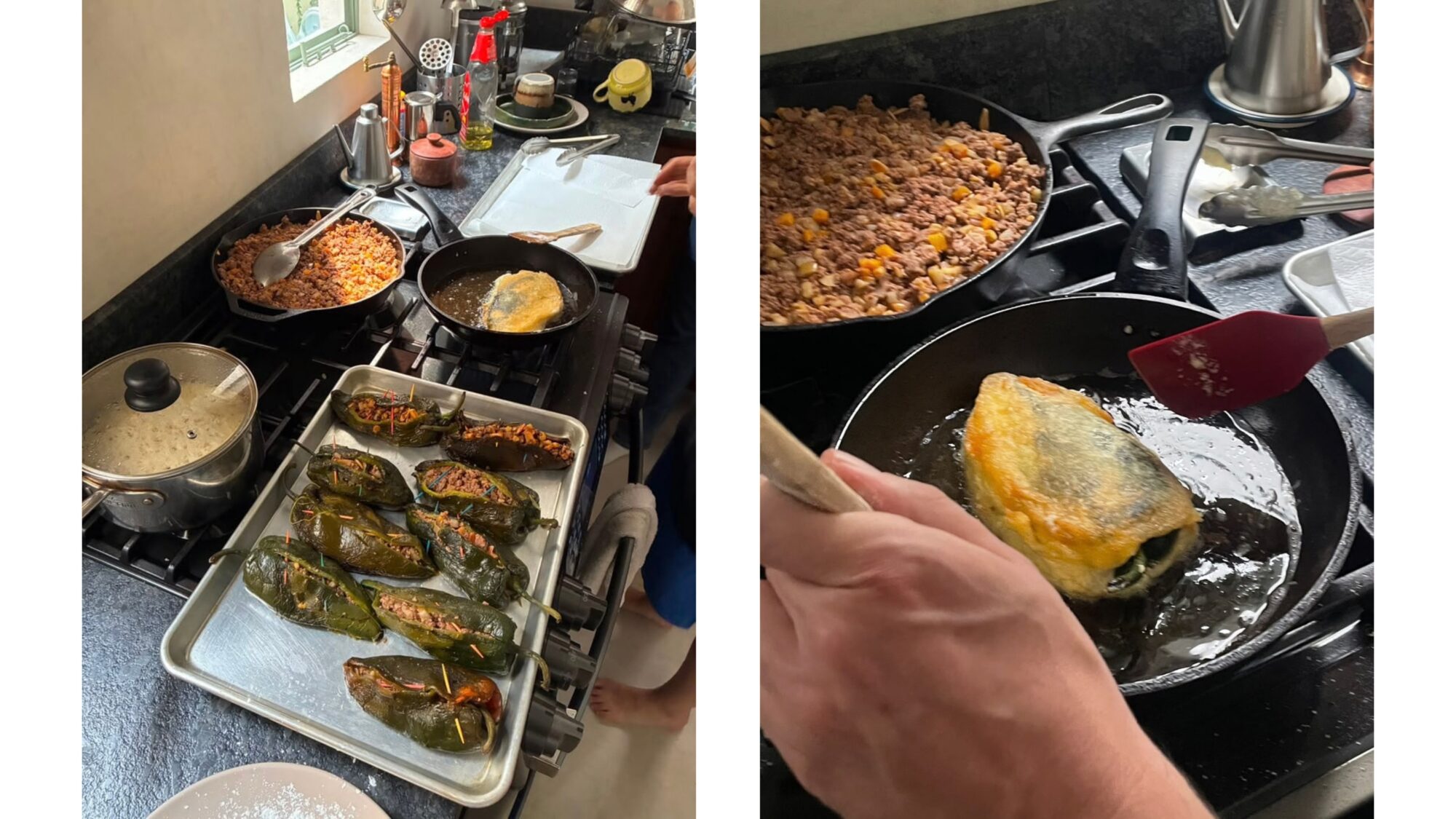
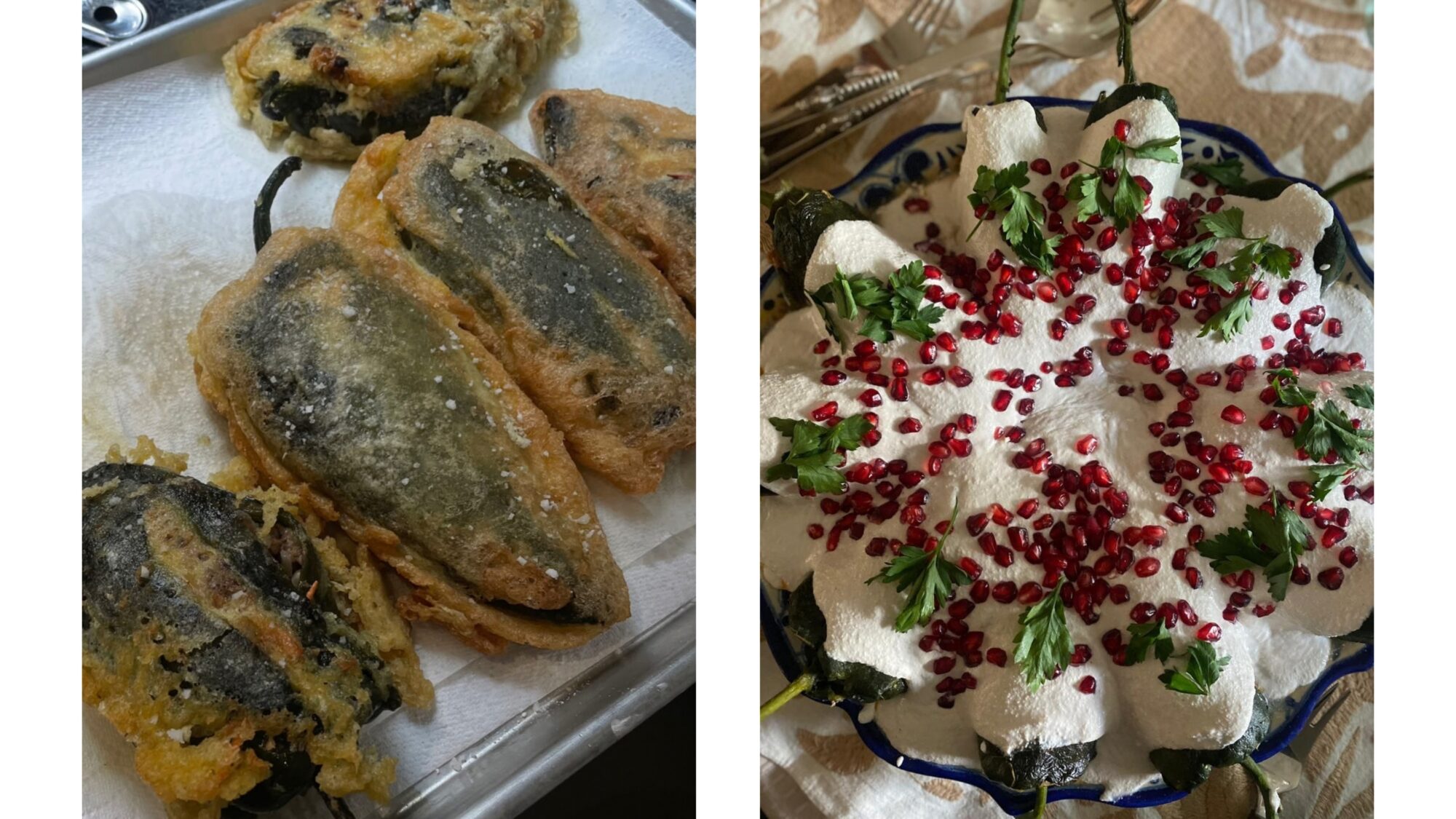
Then there’s the part locals actually argue about. Should the chile be capeado, battered in egg and fried, which is how it’s done in Puebla, or left bare, which is more common in Mexico City and lets the colours show properly? Should the walnut sauce be made with cream, or kept closer to the original version of just walnuts, goat’s cheese and a splash of sherry, a question that tends to divide people the way Spain never quite settles whether tortilla española should have onion in it.
But the strangest detail is the one ingredient that’s technically forbidden. A few years ago I ate one of the best chiles en nogada of my life at a tiny place in Mexico City’s financial district, the kind of restaurant where the same people in suits seem to have lunch five days a week. There was a flavour in the filling I couldn’t quite place, but the Mexican friends I was having lunch with looked at each other and were pretty sure they knew what it was: acitrón. We had to go and ask. The kitchen suddenly had no idea what we were talking about. We’re still pretty sure it was acitrón.
Acitrón is candied biznaga, a barrel cactus native to Mexico whose sale has been banned since the early 2000s, after decades of harvesting pushed several biznaga species toward extinction. Unlike the nopal on the flag, biznaga grows extremely slowly, with some species taking decades to reach maturity. Which explains both why it’s protected and, perhaps, why nobody in that kitchen had the slightest idea what we were talking about. Now that I know why it’s banned, I’m fairly sure I’ll never knowingly taste it again. I suspect that chile will only get better in my memory from here.
If you want to understand what goes into making chiles en nogada, the basic architecture goes like this: poblano chiles are roasted, peeled and carefully opened before being stuffed with a picadillo of meat, tomato, spices, nuts and fruit, usually some combination of apple, pear and peach, with raisins and almonds often joining the mix. Then comes the nogada, made by blending fresh walnuts with cheese, milk or cream, and traditionally a splash of sherry, until you have a smooth white sauce.
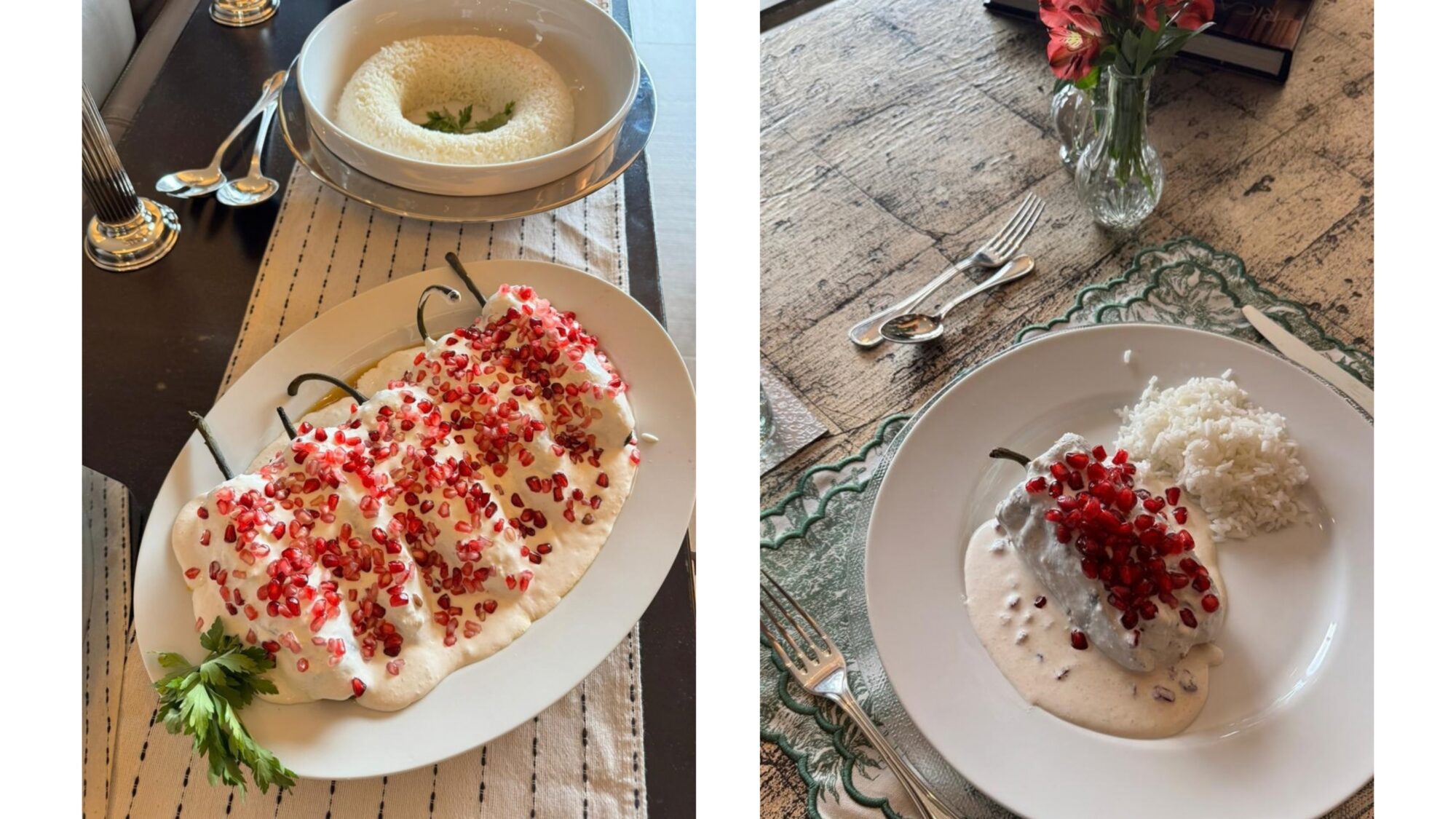
And then comes the satisfying bit: put the flag back together. Spoon the white nogada generously over the green chile and scatter red pomegranate seeds and parsley on top. Green, white and red, although the parsley is doing quite a lot of work on behalf of the green.
You can, of course, attempt all of this yourself. Or learn to make it with someone who already knows what they’re doing; during the season, we can include chiles en nogada in a cooking class in your trip, from roasting and peeling the poblanos to preparing the picadillo and getting the nogada right. And after spending an afternoon making one yourself, you’ll have earned the right to join the capeado versus uncapeado debate with considerably more authority.